
Why a Cracked Tooth Shouldn’t Be Ignored
A crack in a tooth isn’t always dramatic. Sometimes it shows up as a sharp twinge when you bite down, a dull ache that comes and goes, or sensitivity to temperature that seems to appear out of nowhere. Other times, a fracture is obvious immediately, following an injury or biting down on something hard. Either way, a cracked tooth rarely improves on its own, and the longer it goes untreated, the more likely it is to worsen.
At Capone Dental, we take cracked teeth seriously because early treatment often means the difference between a simple repair and a more involved procedure. We will run a thorough evaluation for the size, depth, and location of the crack to determine the safest, most conservative way to protect the tooth and relieve any discomfort you’re experiencing.
Why Treating a Cracked Tooth Matters
Addressing a fractured tooth promptly can help protect both your comfort and the long-term health of your smile. Even a small crack may gradually extend deeper with everyday biting and chewing pressure, potentially allowing bacteria to reach the inner portion of the tooth.
Early treatment can help reduce the risk of infection, preserve more of your natural tooth structure, and avoid the need for extraction in some cases. Repairing the tooth may also relieve sensitivity or discomfort when biting and help restore a more balanced bite, allowing you to chew comfortably and protect surrounding teeth.
Signs You Should Evaluate for a Cracked Tooth
Cracks aren’t always visible to the eye, which is why certain symptoms are worth having checked even if you can’t see obvious damage. You may need an evaluation if you’re experiencing:
- Sharp pain when biting down or releasing pressure on a tooth
- Sensitivity to hot, cold, or sweet foods that comes and goes
- Discomfort that’s difficult to pinpoint to one specific tooth
- A visible line, chip, or fragment missing from a tooth
- Recent trauma to the mouth, such as a fall or sports injury
- A habit of grinding or clenching your teeth
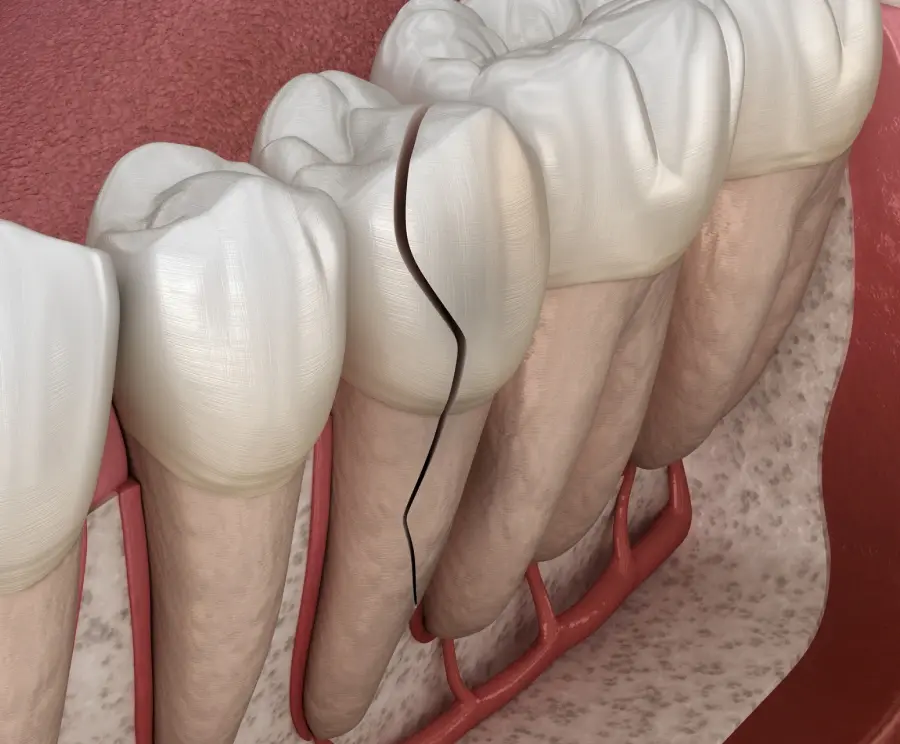
Because cracks can range from a minor surface line to a fracture extending below the gumline, an exam is the only reliable way to determine the extent of the damage and the right course of treatment.
Diagnosing and Repairing a Cracked Tooth
Every cracked tooth is a little different, so treatment is tailored to what we find during your exam.
01.
Discussing Your Symptoms:
We’ll start by asking about your pain, when it occurs, and any recent injury or habits that may have contributed to the crack.
02.
Visual and Digital Examination:
Using magnification, digital X-rays, and sometimes a special dye or bite test, we identify the location and severity of the fracture.
03.
Determining the Extent of the Damage:
Based on the exam, we assess whether the crack is limited to the enamel, extends into the deeper tooth structure, or has reached the nerve.
04.
Recommending the Right Treatment:
Depending on the severity, treatment may involve bonding, a dental crown, or root canal therapy if the nerve is affected.
05.
Restoring the Tooth:
Once a treatment plan is agreed upon, we repair the tooth to restore its strength, function, and appearance.
06.
Follow-Up Monitoring:
For certain fractures, we’ll schedule a follow-up visit to confirm the tooth is healing well and functioning properly.
Common Treatment Options for Cracked Teeth
Not every crack requires the same fix. Depending on the severity and location, treatment for a cracked tooth may include:
- Dental bonding, which fills and seals minor cracks or chips using tooth-colored resin
- Dental crowns, which cover and protect a more significantly cracked tooth to prevent the fracture from worsening
- Root canal therapy, needed when a crack extends into the tooth’s inner pulp and causes infection or nerve damage
- Extraction, reserved for cases where the crack extends below the gumline or the tooth can’t be saved
During your visit, we’ll walk you through which option applies to your specific situation and why.
Don’t Wait Until the Pain Gets Worse
A cracked tooth tends to become more painful and more complicated to treat the longer it’s left alone. If you’re noticing sensitivity, discomfort when chewing, or visible damage to a tooth, it’s worth having it looked at as soon as possible. Call us at 276-386-6162 to schedule your consultation.
Schedule an ExamFrequently Asked Questions About Cracked Teeth Repair
Common signs include pain when biting down, sensitivity to hot or cold that comes and goes, and discomfort that’s hard to pinpoint to a specific tooth. Some cracks are visible, while others can only be confirmed with an exam.
No. Unlike bone, a cracked tooth cannot heal itself. Without treatment, a crack can gradually worsen and, in some cases, lead to infection or the loss of the tooth.
Rinse your mouth with warm water, apply a cold compress to reduce swelling if needed, and avoid chewing on that side of your mouth. Contact our office as soon as possible for an evaluation.
Not always. Root canal therapy is only necessary if the crack extends into the tooth’s inner pulp, where the nerve and blood vessels are located. Many cracks can be treated with bonding or a crown instead.
In many cases, yes, especially when treatment happens early. The likelihood of saving the tooth depends on the size, depth, and location of the crack, which is determined during an exam.
It can be, particularly if you’re in significant pain, have visible damage, or experienced a recent injury. If you’re unsure, it’s best to call and describe your symptoms so we can advise on next steps.
Common causes include biting down on hard foods or objects, teeth grinding, previous large fillings that weaken the tooth, trauma to the mouth, and natural wear that occurs with age.
Cost depends on the treatment needed, whether that’s bonding, a crown, or root canal therapy. During your exam, we’ll provide a clear breakdown of recommended treatment and associated cost before moving forward.